

2026-10-22
Modern vehicle architecture is no longer just mechanical; it is a complex web of Electronic Control Units (ECUs), high-speed data sensors, and high-voltage power distribution. In this environment, the wiring harness acts as the nervous system. Selecting the right partner for an OEM project is a decision that dictates vehicle reliability, safety, and long-term brand reputation.
The SOAR Custom Automotive Wiring Harness has emerged as a preferred solution for Tier 1 suppliers and vehicle manufacturers. This preference isn’t based on cost alone, but on the intersection of material science, engineering precision, and rigorous compliance with automotive standards.
OEM projects often fail not because of the design, but because of the transition from a CAD model to a physical harness that must survive ten years of vibration. A custom harness must account for "Design for Manufacturability" (DFM) from day one.
When engineers specify a SOAR Custom Automotive Wiring Harness, they are leveraging a workflow that prioritizes signal integrity. In automotive environments, Electromagnetic Interference (EMI) is a constant threat. SOAR integrates advanced shielding techniques and twisted-pair configurations to ensure that low-voltage sensor data—crucial for ADAS and engine management—remains uncorrupted by high-voltage power lines.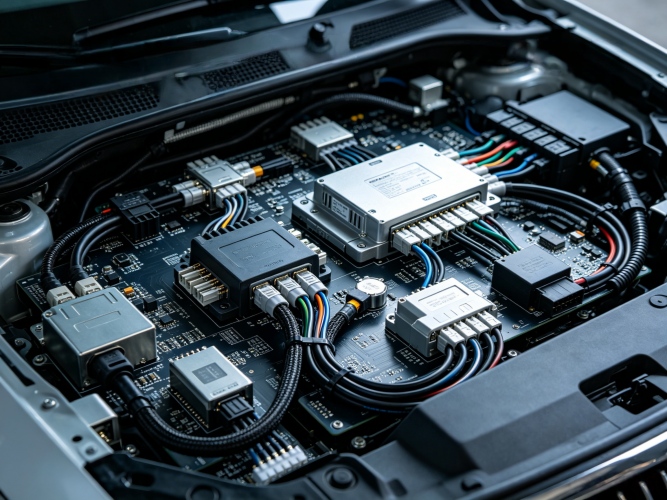
To understand the value of a custom solution, one must look at the technical granularity. Automotive environments are among the most hostile for electronics, characterized by extreme temperature fluctuations, chemical exposure, and constant mechanical stress.
| Feature | Standard Requirement | SOAR Custom Specification |
|---|---|---|
| Operating Temperature | -40°C to +105°C | Up to +150°C (Application Dependent) |
| Insulation Material | Standard PVC | Cross-linked Polyethylene (XLPE) or ETFE |
| Flame Retardancy | UL94 V-0 | Exceeds FMVSS 302 Standards |
| Connector Integration | Generic Brands | TE, Molex, JST, or Custom Precision Tooling |
| Environmental Sealing | IP65 | Up to IP69K for Chassis/Engine Bay |
The use of XLPE (Cross-linked Polyethylene) insulation is a hallmark of high-tier custom harnesses. Unlike standard PVC, XLPE offers superior resistance to heat and abrasion, which is critical for harnesses routed through the engine compartment or near exhaust systems.
For an OEM Project Manager, a harness is only as good as its last test. The automotive industry operates under zero-tolerance for failure. This is why the manufacturing of a SOAR Custom Automotive Wiring Harness follows the IATF 16949 quality management system framework.
The quality control process involves several non-negotiable stages:
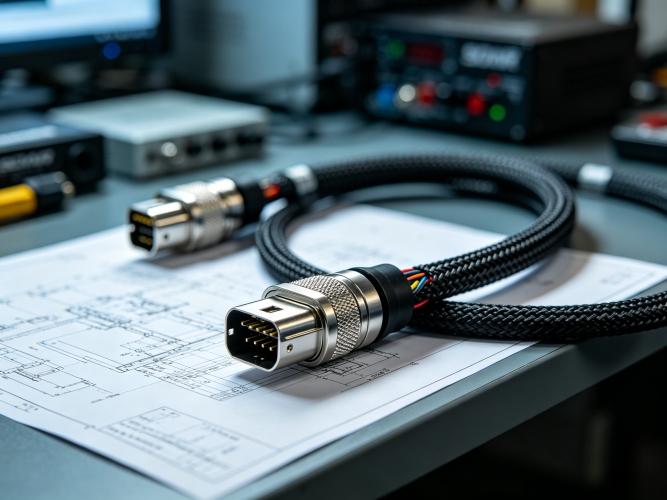
Modern vehicle interiors are increasingly cramped. Engineers must fit more functionality—ambient lighting, infotainment, heated seats—into smaller cross-sectional areas.
SOAR addresses this through high-density wiring configurations and the use of ultra-thin wall wires (like ISO 6722 compliant cables). By reducing the harness diameter without sacrificing current-carrying capacity, SOAR enables OEMs to:
While mass-market passenger cars have high volumes, specialized OEM projects—such as emergency vehicles, agricultural machinery, or electric buses—require highly specific customizations.
The SOAR Custom Automotive Wiring Harness program allows for:
From a procurement perspective, the "Custom" in SOAR refers to the service model as much as the product. OEM projects require a partner that can scale from Alpha and Beta prototypes to Mass Production (SOP) without losing design intent.
1. Prototyping Speed:
In the early stages of an OEM project, speed is life. SOAR’s ability to produce functional samples quickly allows engineering teams to perform "mule" vehicle testing and refine routing before expensive tooling is finalized.
2. Supply Chain Resilience:
By maintaining a diverse inventory of automotive-grade components (terminals, housings, and sleeves), SOAR mitigates the lead-time risks that often plague the electronics industry.
3. Total Cost of Ownership (TCO):
While custom harnesses may have a higher unit price than "off-the-shelf" bundles, they reduce TCO. A harness that fits perfectly reduces assembly time on the production line and eliminates the warranty costs associated with vibration-induced failures.
Choosing a SOAR Custom Automotive Wiring Harness is a strategic move to ensure technical compliance and operational excellence. As the automotive industry pivots toward electrification and autonomy, the demand for high-reliability interconnect solutions will only grow. By focusing on DFM, material integrity, and rigorous testing, SOAR provides the foundational reliability that OEM projects require to succeed in a competitive global market.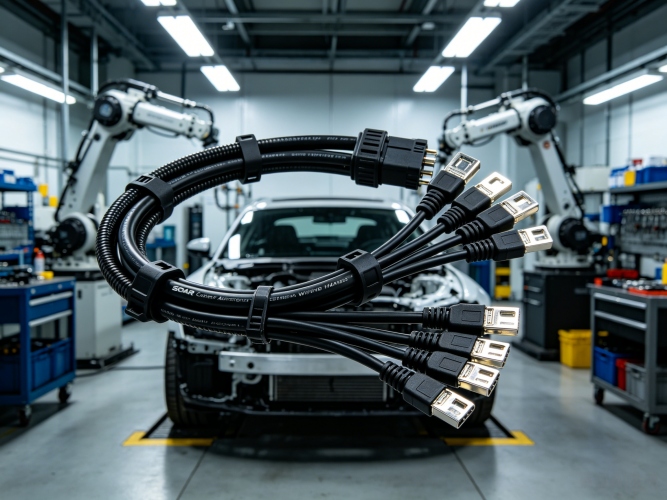
Q1: What is the typical lead time for a custom automotive harness prototype?
Lead times vary based on component availability, but typically range from 2 to 4 weeks for initial functional prototypes. Mass production lead times are established during the RFQ phase based on volume and material sourcing.
Q2: Can SOAR provide harnesses that meet IP69K ratings for external use?
Yes. For chassis, undercarriage, or heavy machinery applications, SOAR utilizes specialized overmolding and sealed connector systems (such as Deutsch or Amphenol) to achieve IP67, IP68, or IP69K protection.
Q3: Does SOAR support low-volume OEM projects?
Yes. While many Tier 1 suppliers only engage in high-volume passenger car projects, SOAR offers a flexible manufacturing model that supports both specialty low-volume production and high-volume industrial runs.
Q4: How does SOAR ensure signal integrity for high-speed data transmission?
We use controlled-impedance cabling, high-quality shielding (foil or braid), and specific lay-length twisting to minimize crosstalk and external EMI, ensuring compliance with automotive ethernet or LVDS requirements.
Q5: Are all materials used in the harness RoHS and REACH compliant?
Absolutely. We adhere to all global environmental regulations and can provide full IMDS (International Material Data System) documentation for OEM compliance tracking.


